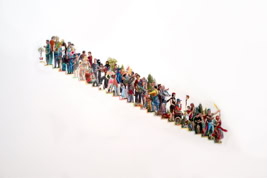
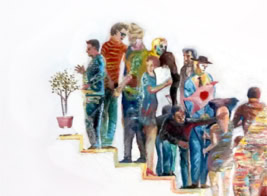
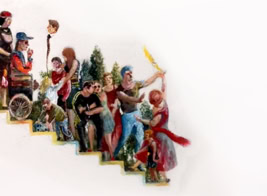
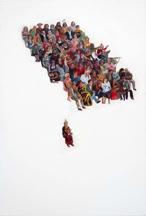
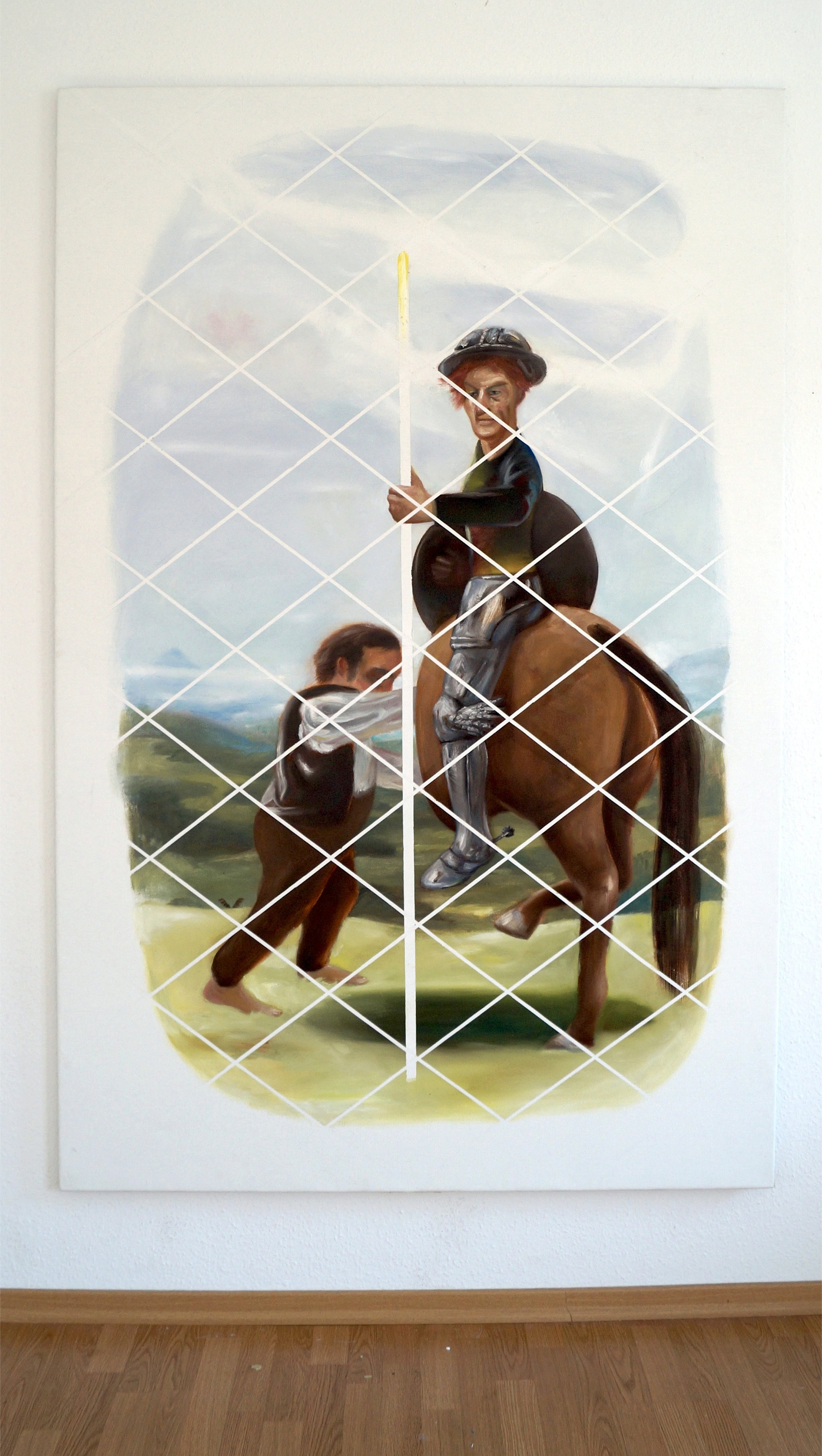
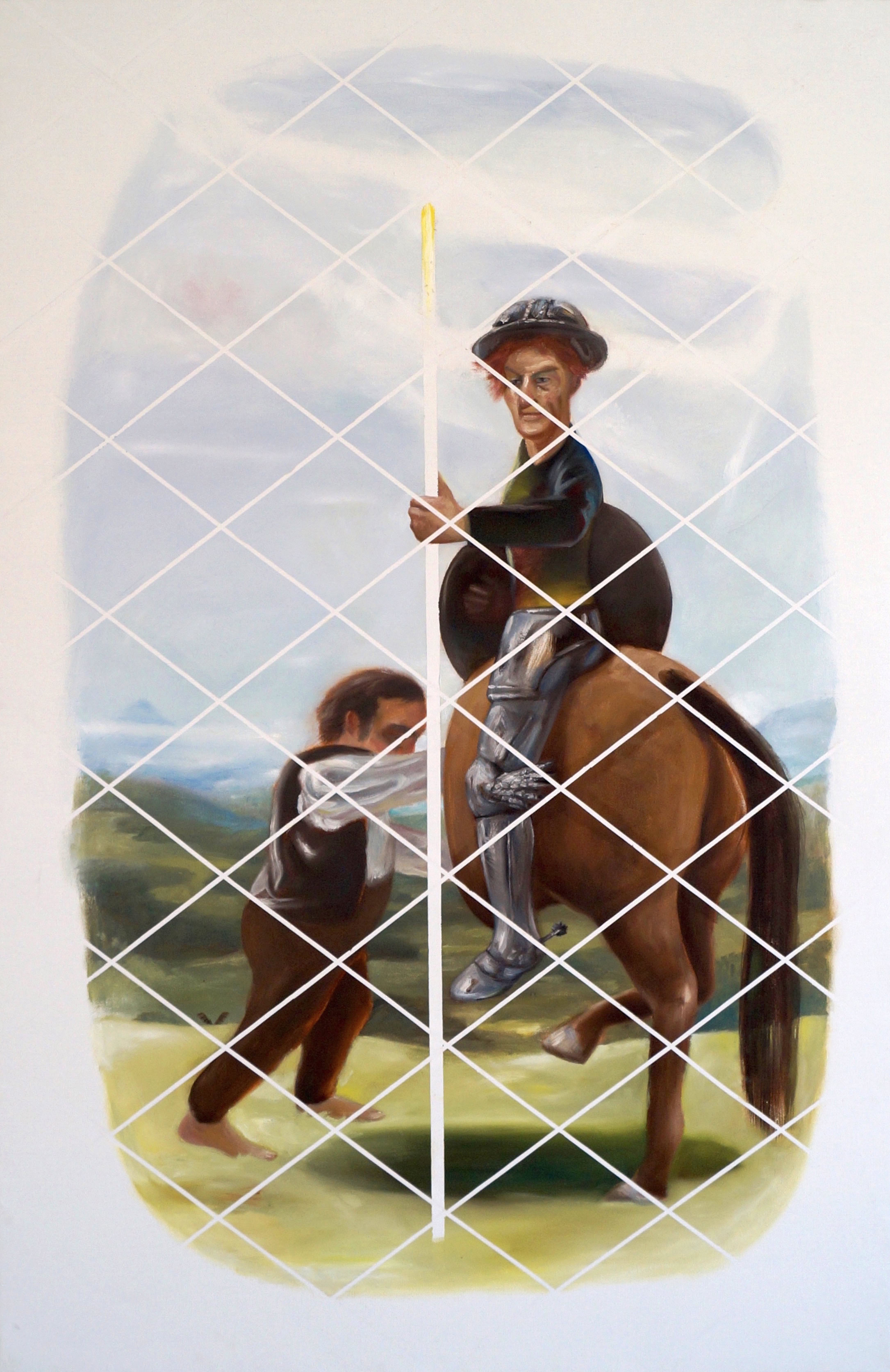
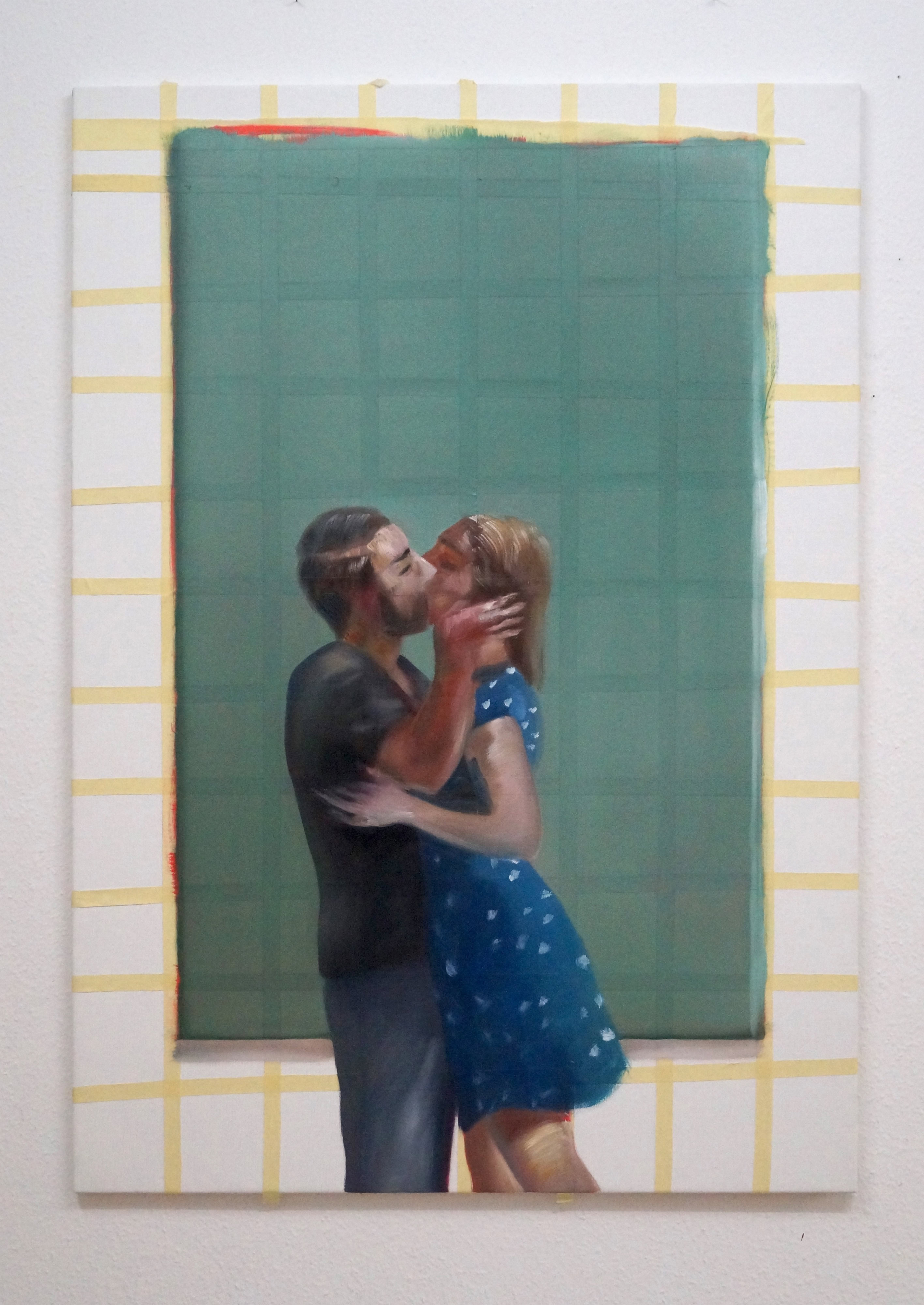
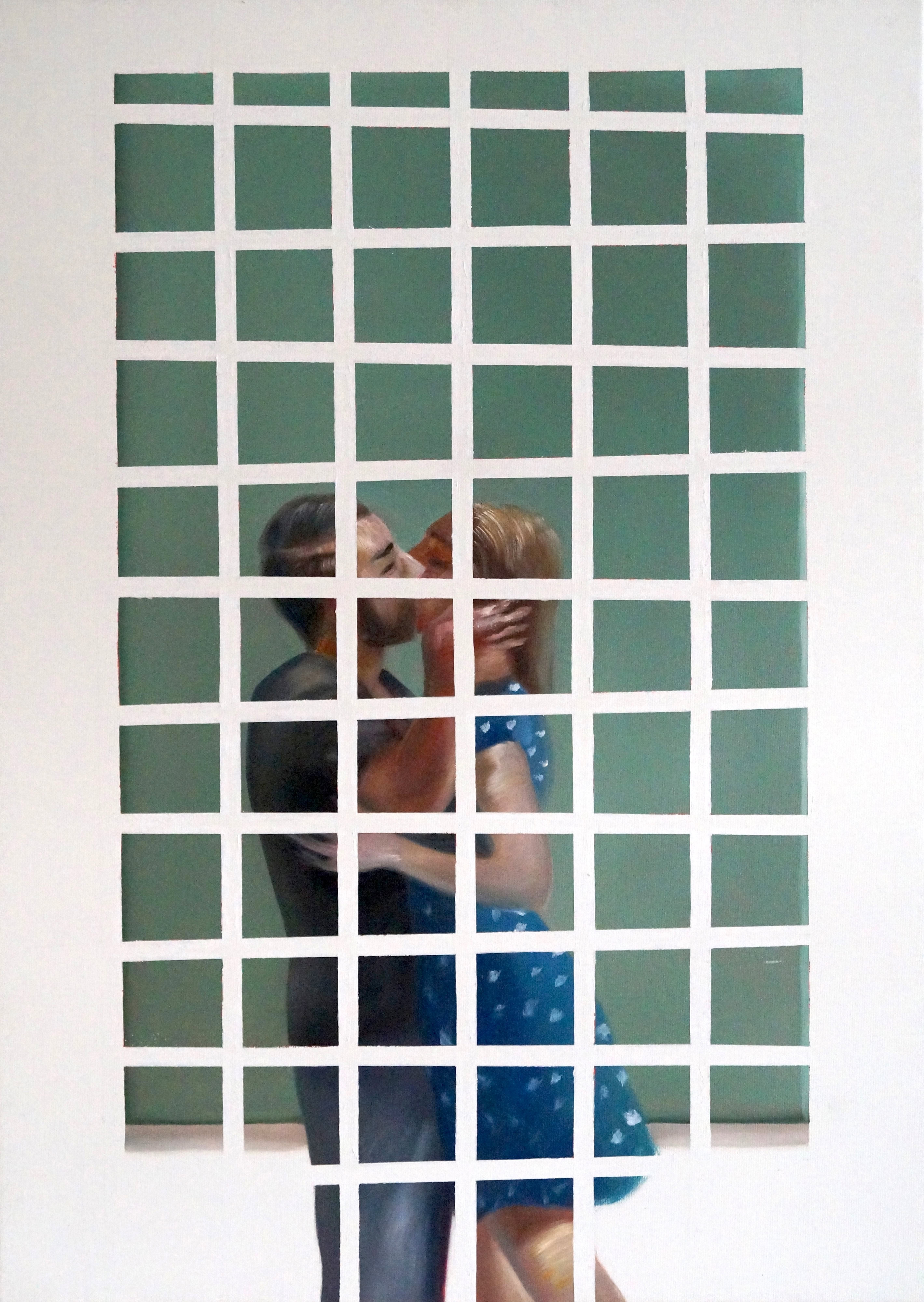
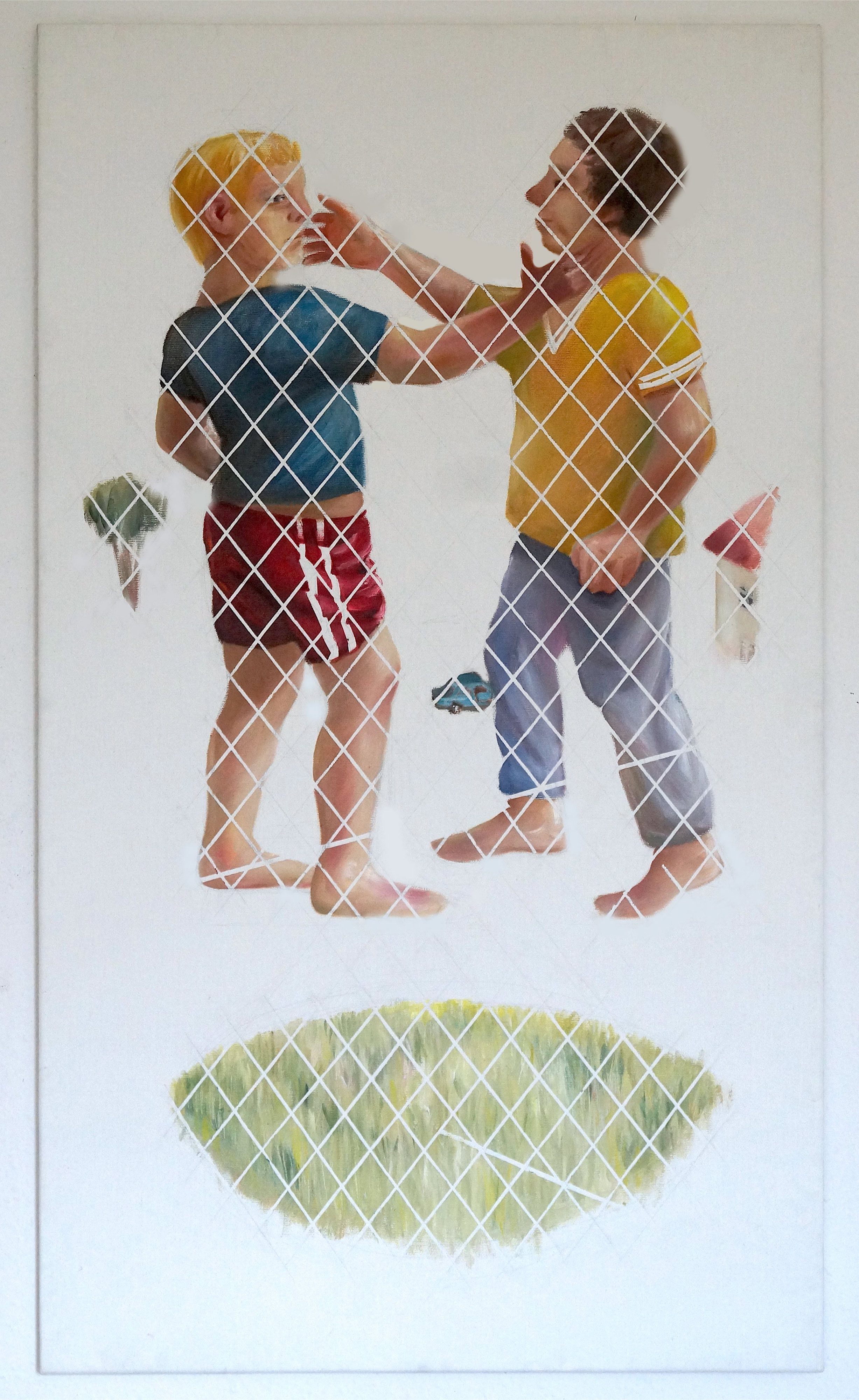
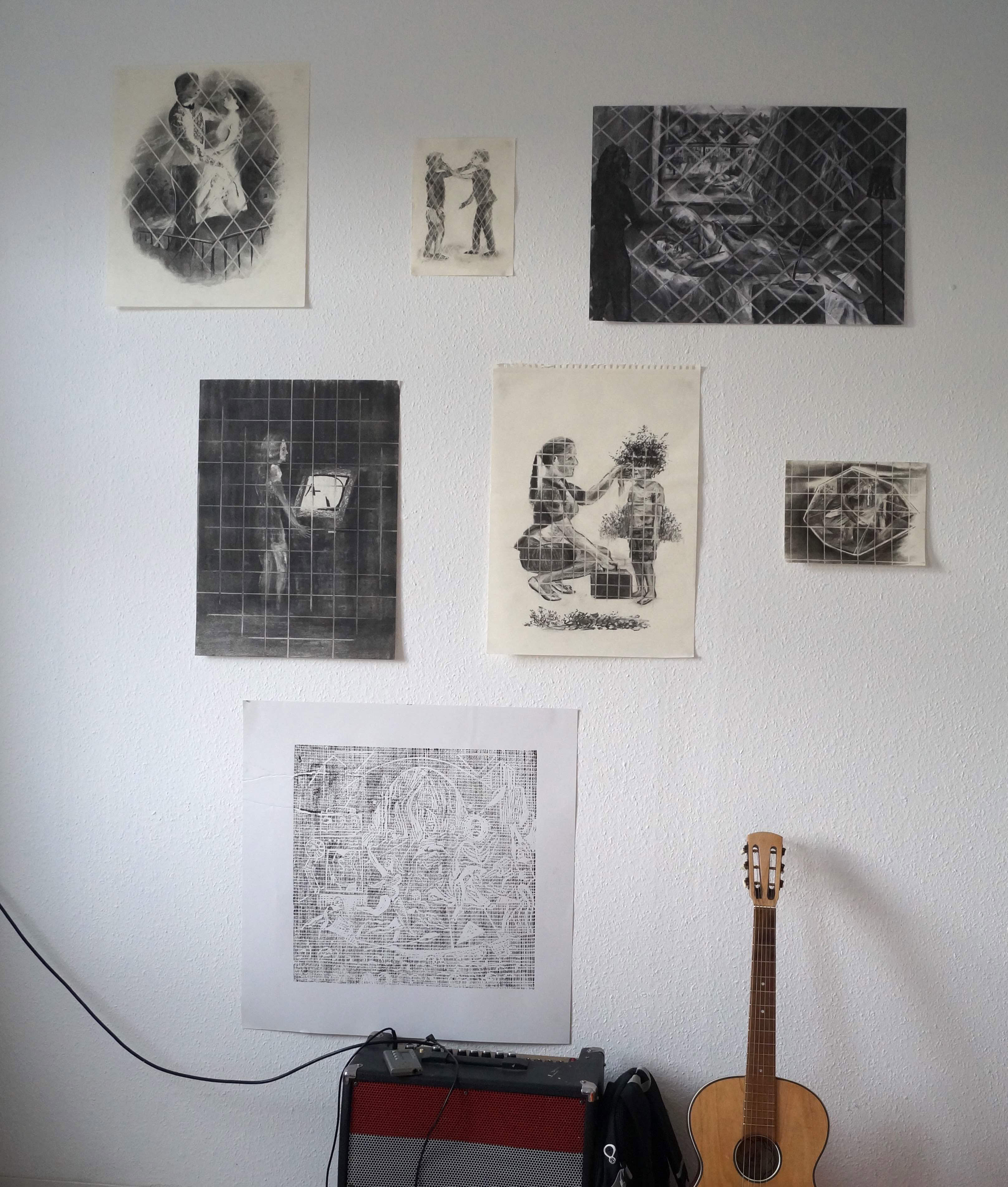
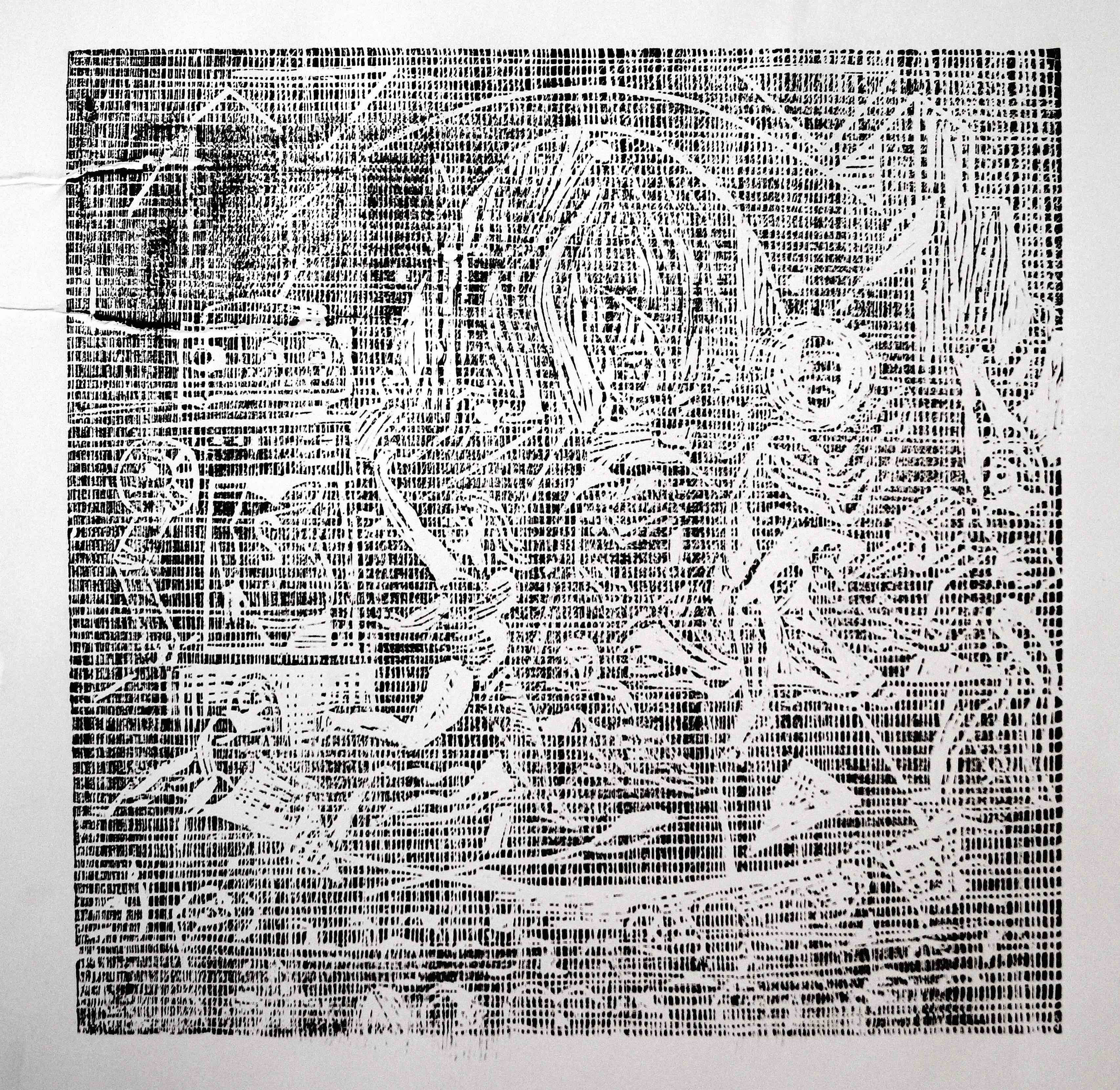
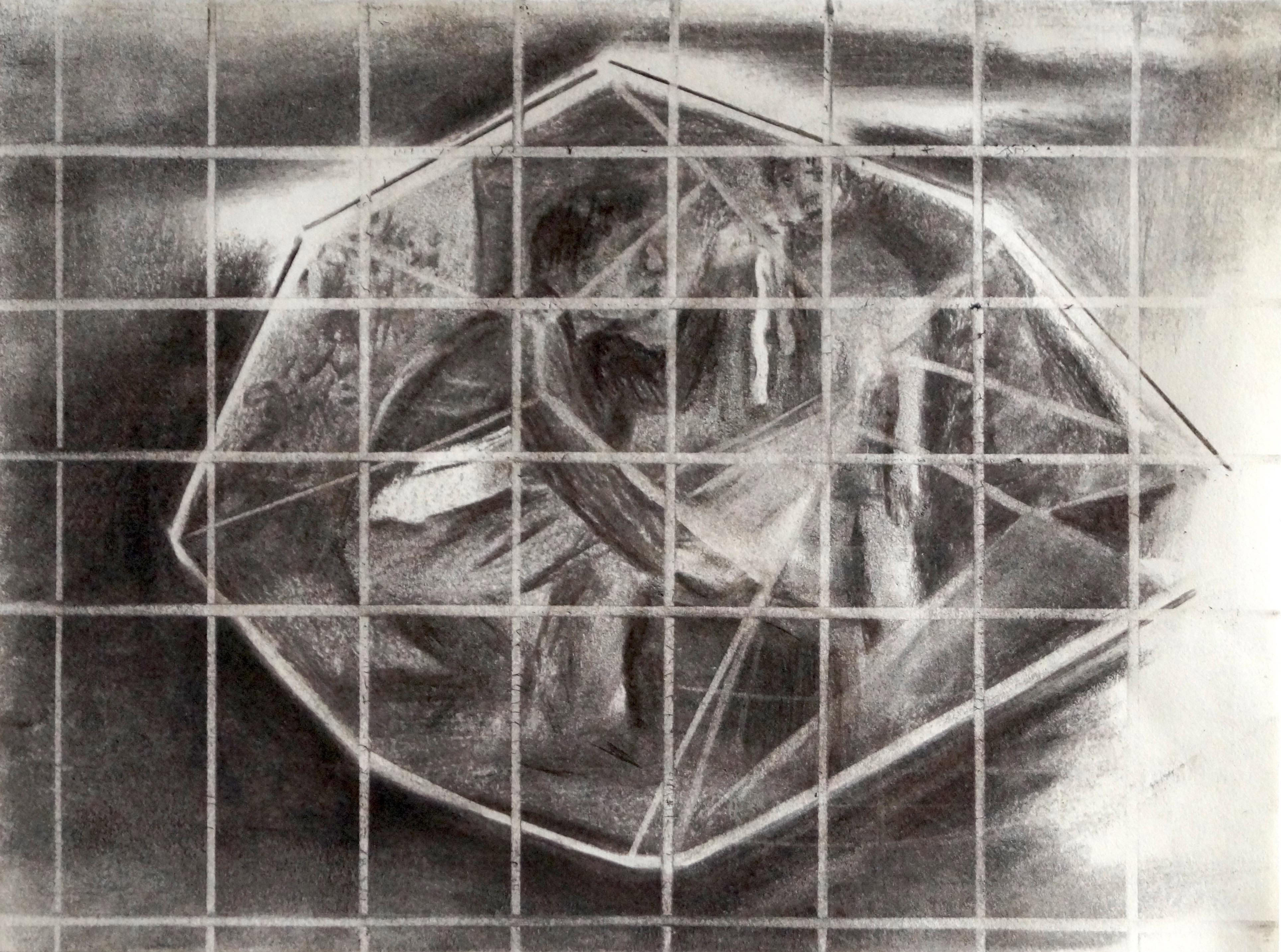
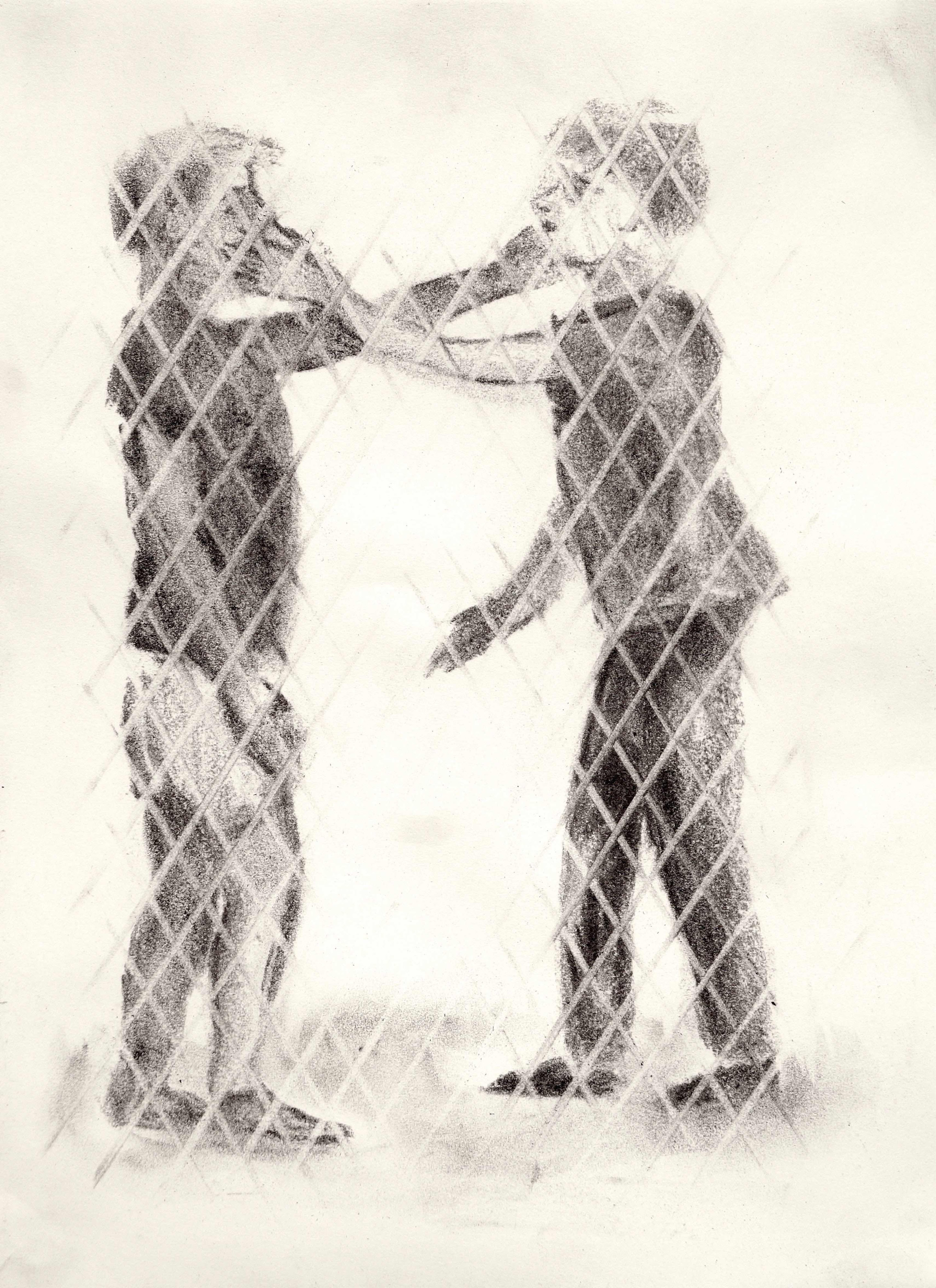
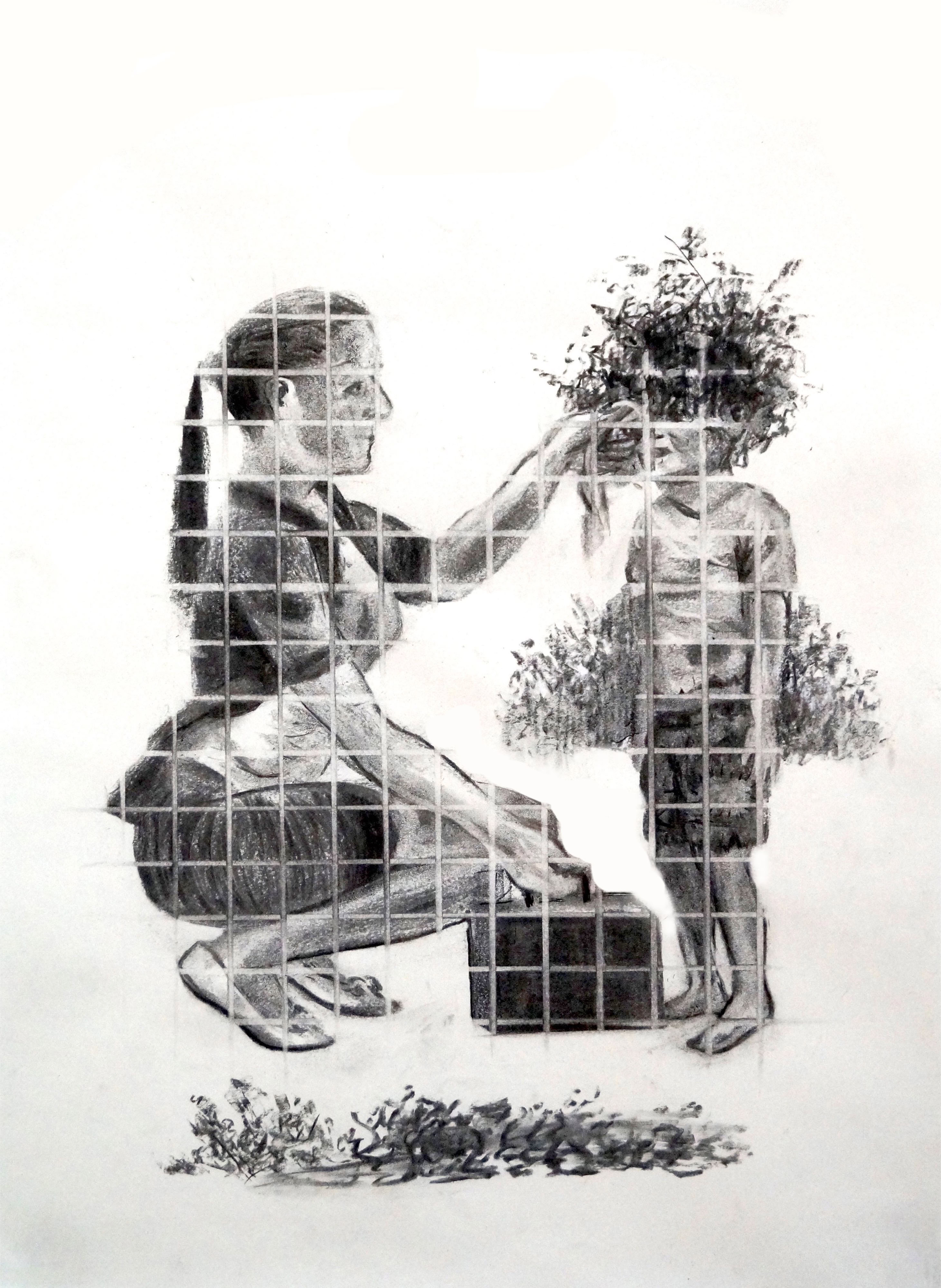
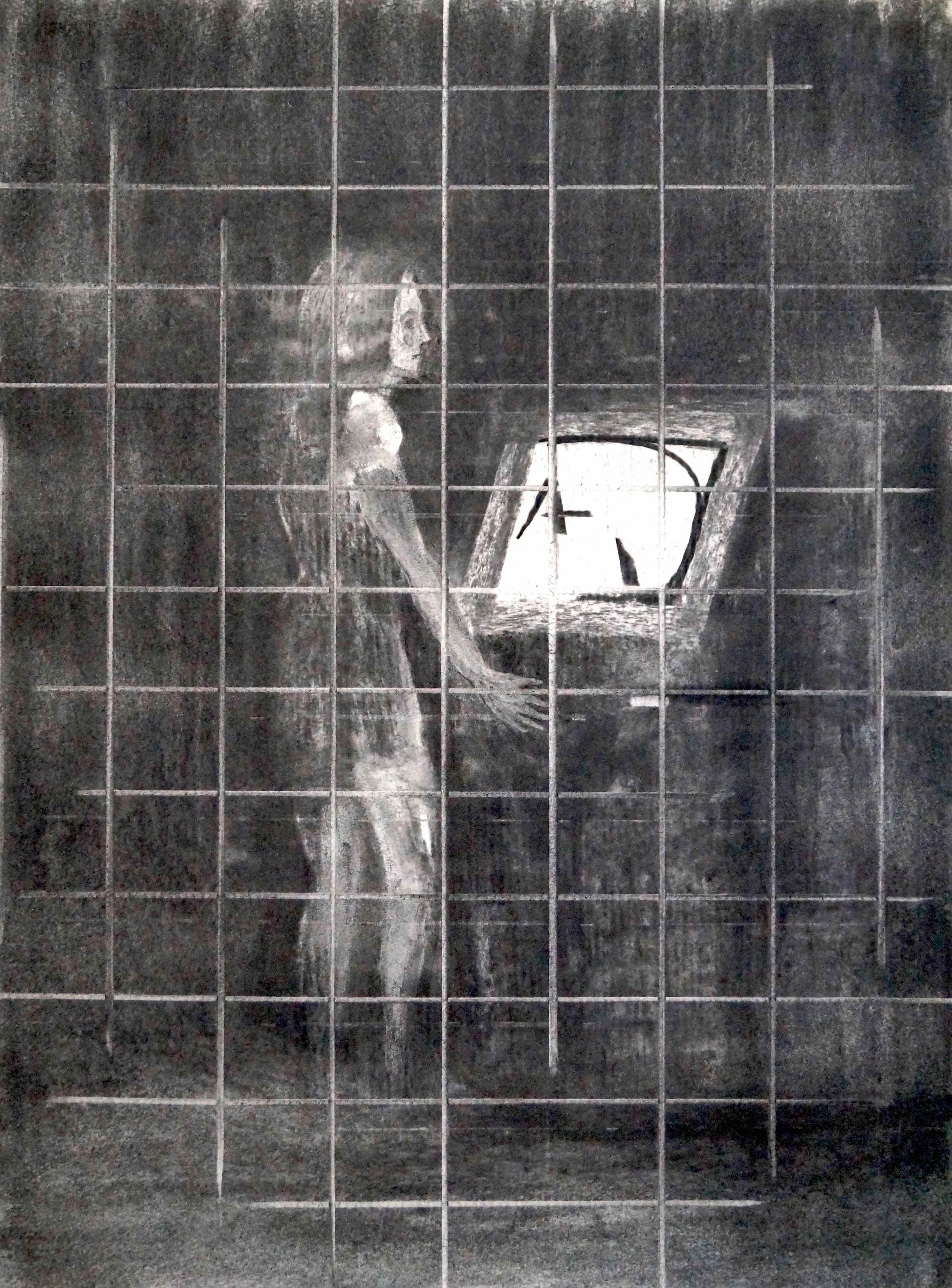
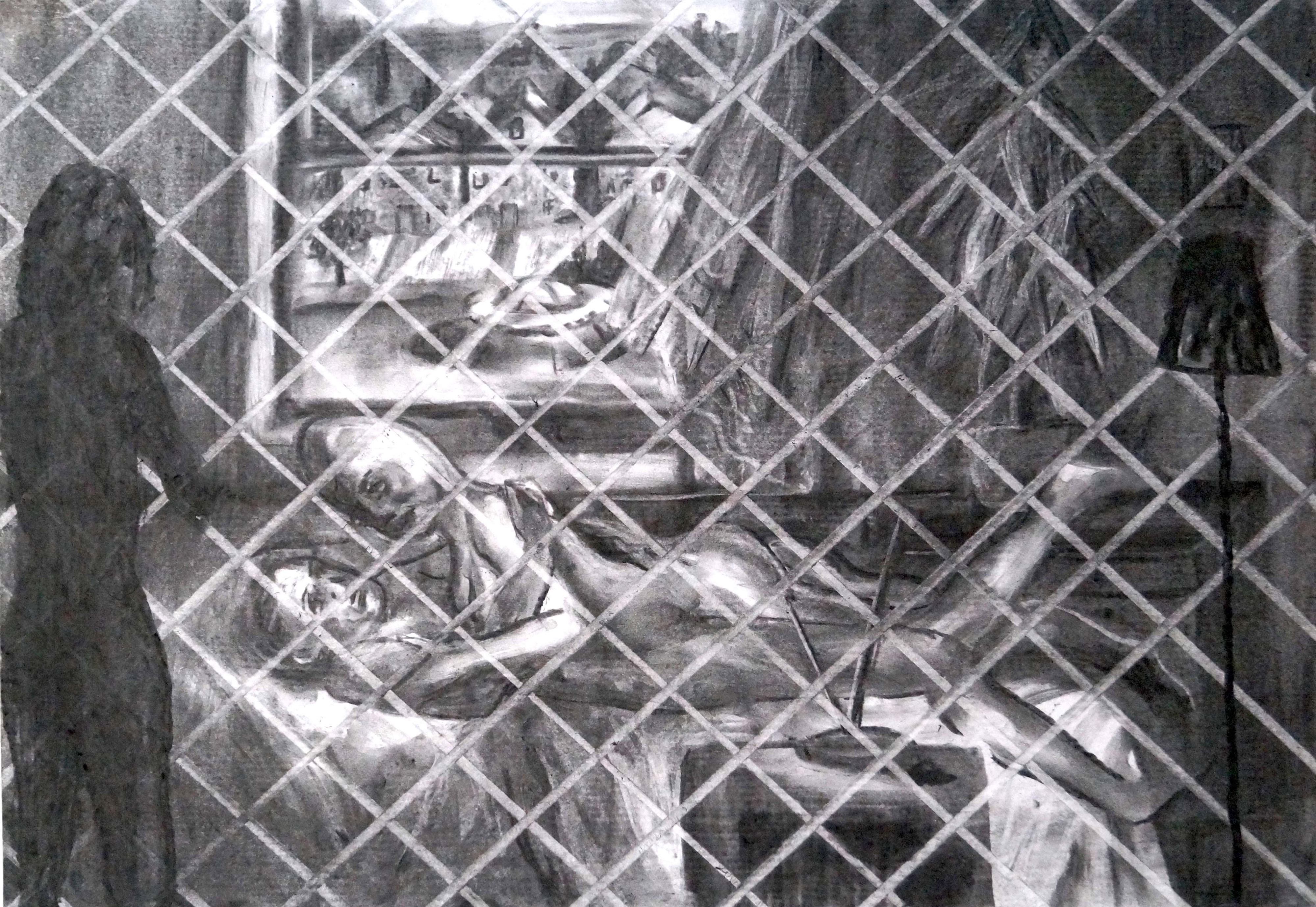
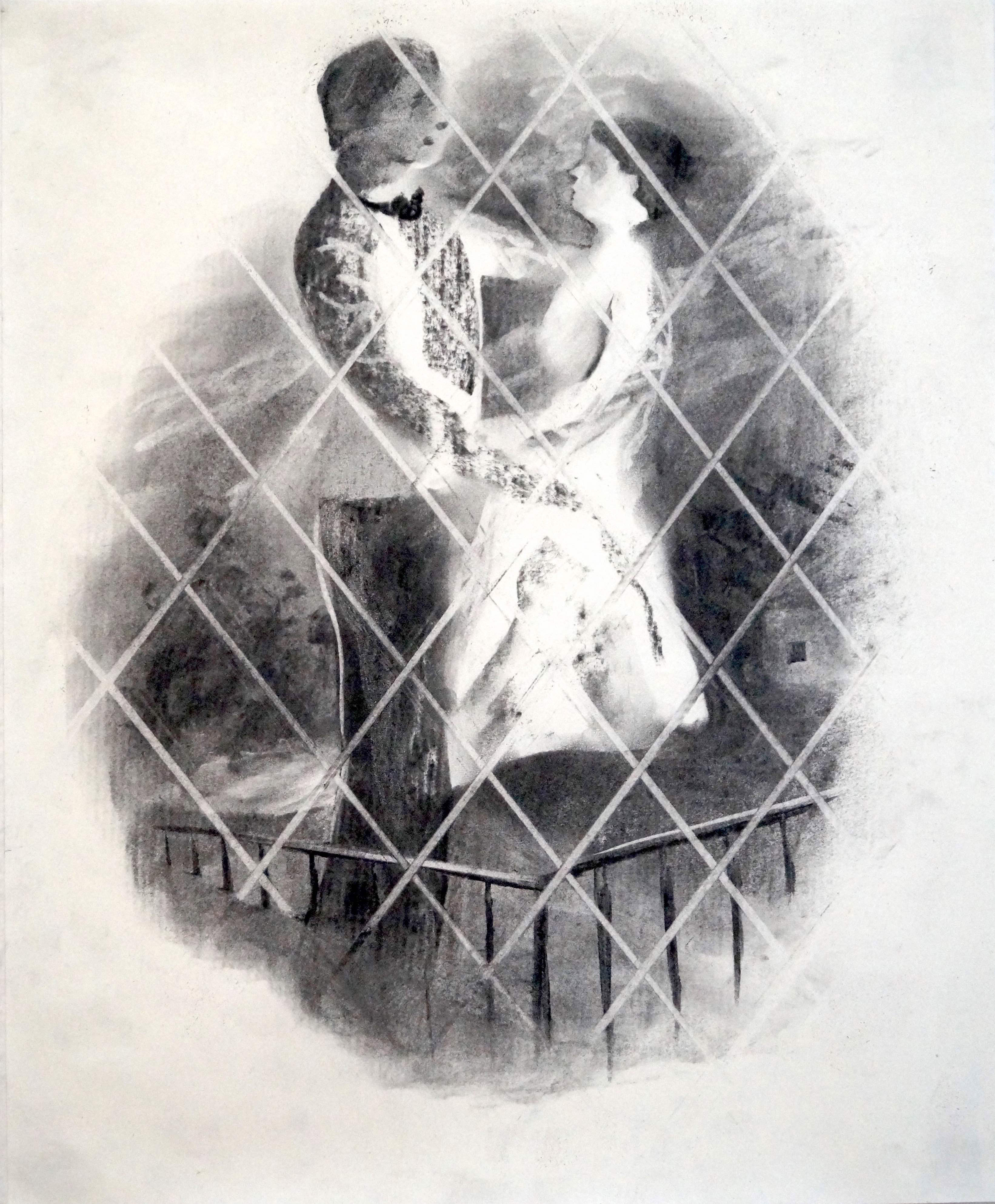
White Rooms Resonance
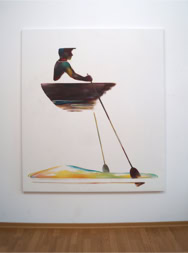
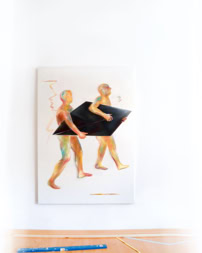
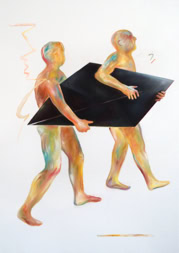
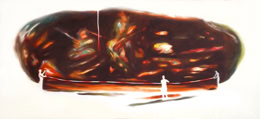
2015 – Today, Oil on canvas | Various dimensions (40 – 200 cm)
Keingedicht – Ich sage zu mir immer wir
Eine kurze Un-Geschichte über Weiße Räume DE
"In weißen Räumen Gegenstände und Figuren zu platzieren, gleicht dem Moment, in dem ein blinder Passagier andere Passagiere und Gegenstände in der Straßenbahn weiß anstreicht, wodurch diese einander ähnlicher werden."
Nehmen wir an, Sie wären Präsidentin oder Präsident oder so.
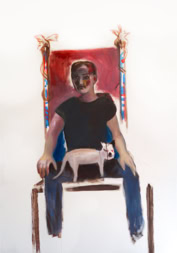
Sie sitzen auf dem bequemsten Sessel des Landes, wenn nicht gar der ganzen Welt. (Fühlt sich doch ganz okay an, oder?) In den letzten zehn Sekunden der Amtszeit möchten wir zufällig ein echt großes Problem endgültig lösen. Eines, das außerdem die Probleme unserer Kinder löst. Neben dem bequemsten Sessel wähnen wir uns zufällig auch im Besitz der besten Minibar des Landes.
(Nur eine Info.)
Die zwei Themen, die uns unsere Beraterin oder unser Berater – oder wer auch immer – auf den Tisch legt, sind die Watergate-Affäre und die Nipplegate-Affäre. (Bei der Nipplegate-Affäre übertrug MTV live, wie Janet Jacksons rechte Brust von Justin Timberlake entblößt wurde. Die Watergate-Affäre war ein Abhörskandal unter Präsident Nixon – an sich nichts Ungewöhnliches und wäre vermutlich nicht weiter aufgefallen, hätte Nixon ein bis zwei Fehler weniger gemacht: Erstens verwanzte er sich ausgerechnet selbst und lieferte das belastende Material frei Weißhaus. Zweitens verstießen seine Ambitionen gegen so ziemlich jede denkbare Form von Anstand.)
Welches Thema wählen Sie?
Die Tageszeit und Menge der zur Verfügung stehenden Genussmittel könnten eine Entscheidung beeinflussen. Ist ja auch Stress so ein Job.
Bush und Nixon zum Beispiel waren – sagen wir: nicht gerade nüchtern. (Mehr als die Hälfte der US-Präsidenten litt zufällig unter schwerwiegenden psychischen und physischen Krankheiten oder einer Alkoholsucht, so wie der aktuelle EU-Parlamentspräsident oder die aktuelle EU-Parlamentspräsidentin. Nur eine Info).
Bush überwand die Sucht (etwas später) und trat einer Methodistenkirche bei. Spricht eher für Nipple-Problemlösungen.
Wie löst man solche Probleme?
Fragen über Fragen. Denken Sie nur, tatsächlich gibt es viele Menschen, denen diese oder ähnlich affärige Entscheidungen schwerfallen. Natürlich ist das nur ein Fall von vielen, der impliziert, mit der Wirklichkeit etwas zu tun zu haben, was selbstredend nicht der Fall ist, aber darum geht es ja.
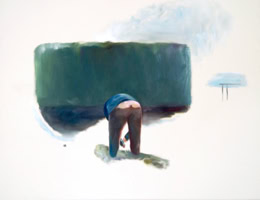
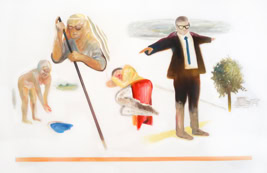
In weißen Räumen Gegenstände und Figuren zu platzieren, gleicht dem Moment, in dem ein blinder Passagier andere Passagiere und Gegenstände in der Straßenbahn weiß anstreicht, wodurch diese sich ähnlicher werden.
Das relativiert nicht alles, aber zum Beispiel Hautfarben.
Es gilt historisch als bewiesen, dass sich Politiker und Politikerinnen wesentlich leichter austauschen lassen, wenn man sie zuvor mit weißer Farbe bemalt.
Menschliche Wahrnehmung ist erhaben, sie verschafft jedem Realisten und jeder Realistin Naivität, während das Bewusstsein der eigenen Unkenntnis unheimlich erleichtern kann.
Berlin, Juni 2018
Nonpoem – I Always Call Myself We
A short nonstory about White Rooms
“Placing objects and figures in white rooms is like the moment a stowaway on a tram starts painting the other passengers and objects white, making them slowly resemble each other more and more.”
Let us assume you are President or something like that.
You are sitting in the most comfortable chair in the country, if not the entire world. (Feels pretty alright, doesn’t it?) In the last ten seconds of your term, we randomly decide to solve one very big problem once and for all. One that also takes care of our children’s problems. Next to the most comfortable chair, we also imagine ourselves in possession of the best minibar in the country.
(Just saying.)
The two topics our advisor – or whoever that might be – puts on the table are the Watergate affair and the Nipplegate affair. (During Nipplegate, MTV broadcast live how Janet Jackson’s right breast was exposed by Justin Timberlake. The Watergate affair was an eavesdropping scandal under President Nixon – nothing too unusual in itself, and it probably would not have stood out much, had Nixon not made one or two crucial mistakes: First, he wiretapped himself and delivered the incriminating material straight to the White House, self-inflicted evidence and all. Second, his ambitions violated just about every imaginable form of decency.)
Which topic do you choose?
The time of day and the amount of available intoxicants might influence the decision. Understandable, really – it is a stressful job.
Bush and Nixon, for example, were alcoholics – or allegedly so, or whatever you prefer to call it. (More than half of US presidents are often said to have suffered from serious mental or physical conditions, or alcohol addiction, much like the current President of the European Parliament or the current President of the European Parliament. Just information.)
Bush eventually overcame his addiction (a bit later) and joined a Methodist church. Which seems to lean more toward nipple-related problem solving.
How do you solve problems like these?
So many questions. Think about it: there are actually many people for whom decisions like these – or similarly scandal-shaped ones – are difficult. Of course, this is just one case among many that pretends to have something to do with reality, which of course it does not, but that is not the point anyway.
In white rooms, placing objects and figures is like the moment a stowaway paints other passengers and objects in a tram white, making them become more similar to each other.
This does not relativize everything, but for example skin colour.
Historically, it is considered proven that politicians are easier to replace once they have been painted white beforehand.
Human perception is generous: it gives every realist a fair dose of naivety, while the awareness of one’s own ignorance can be strangely relieving.
Berlin, 2018
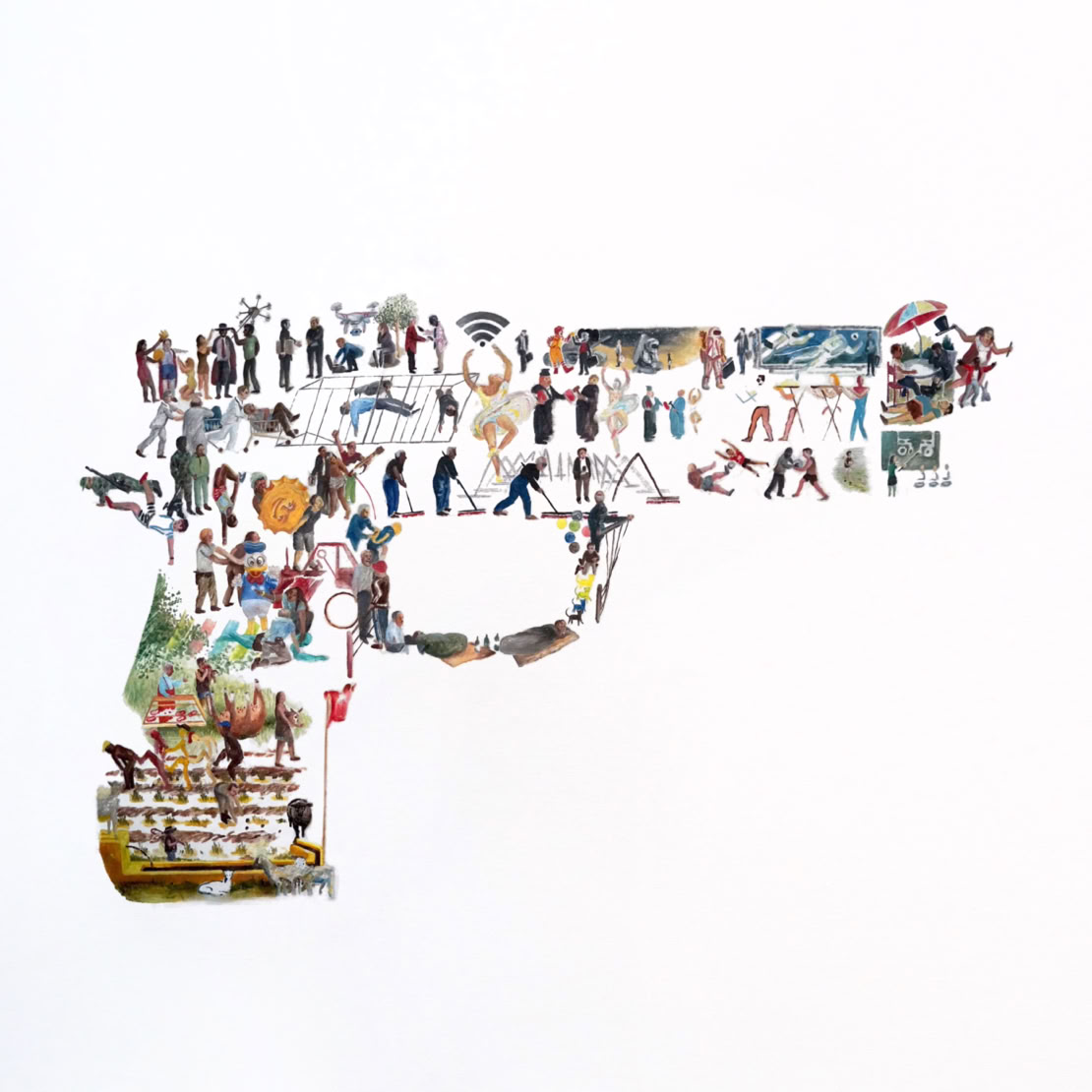
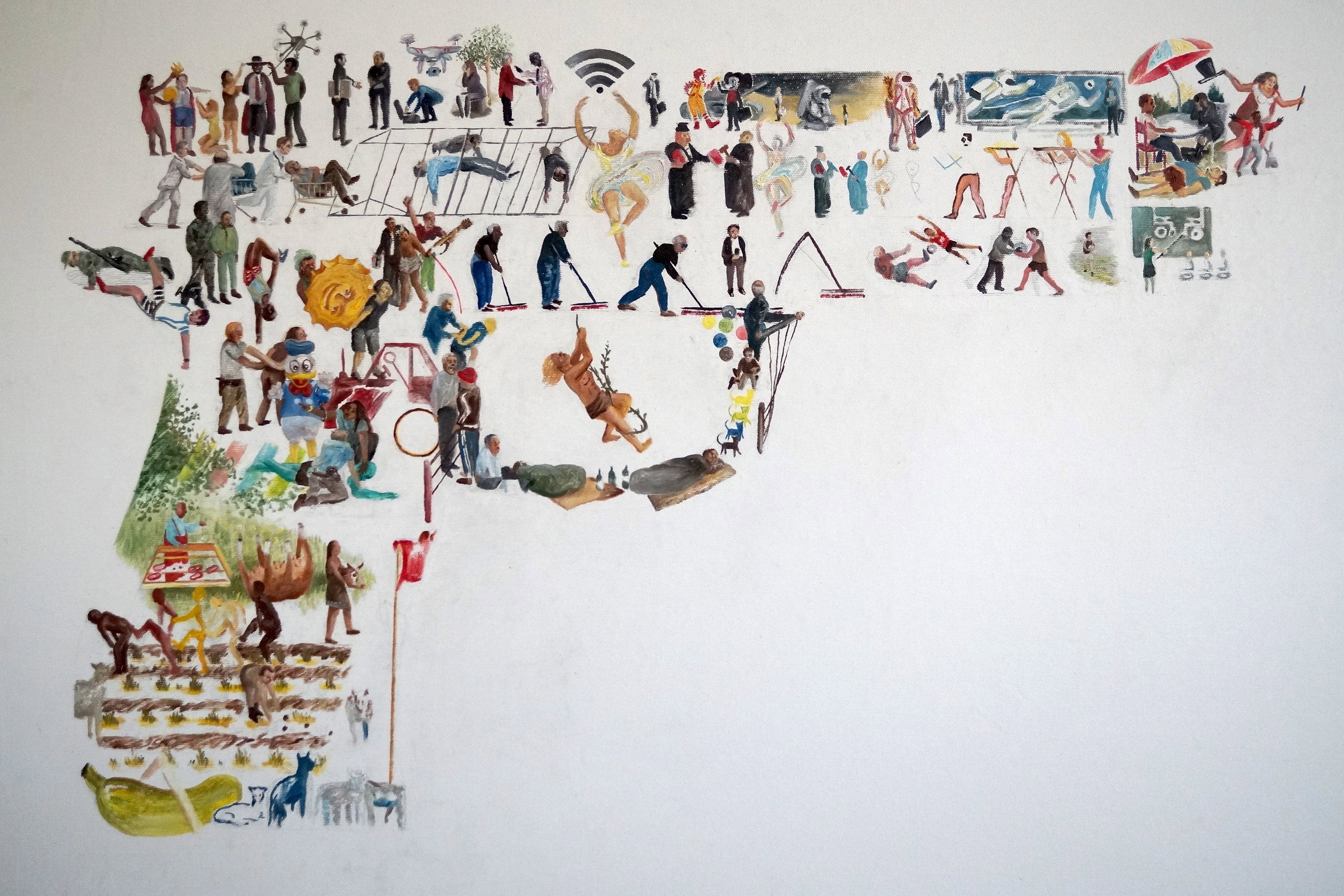
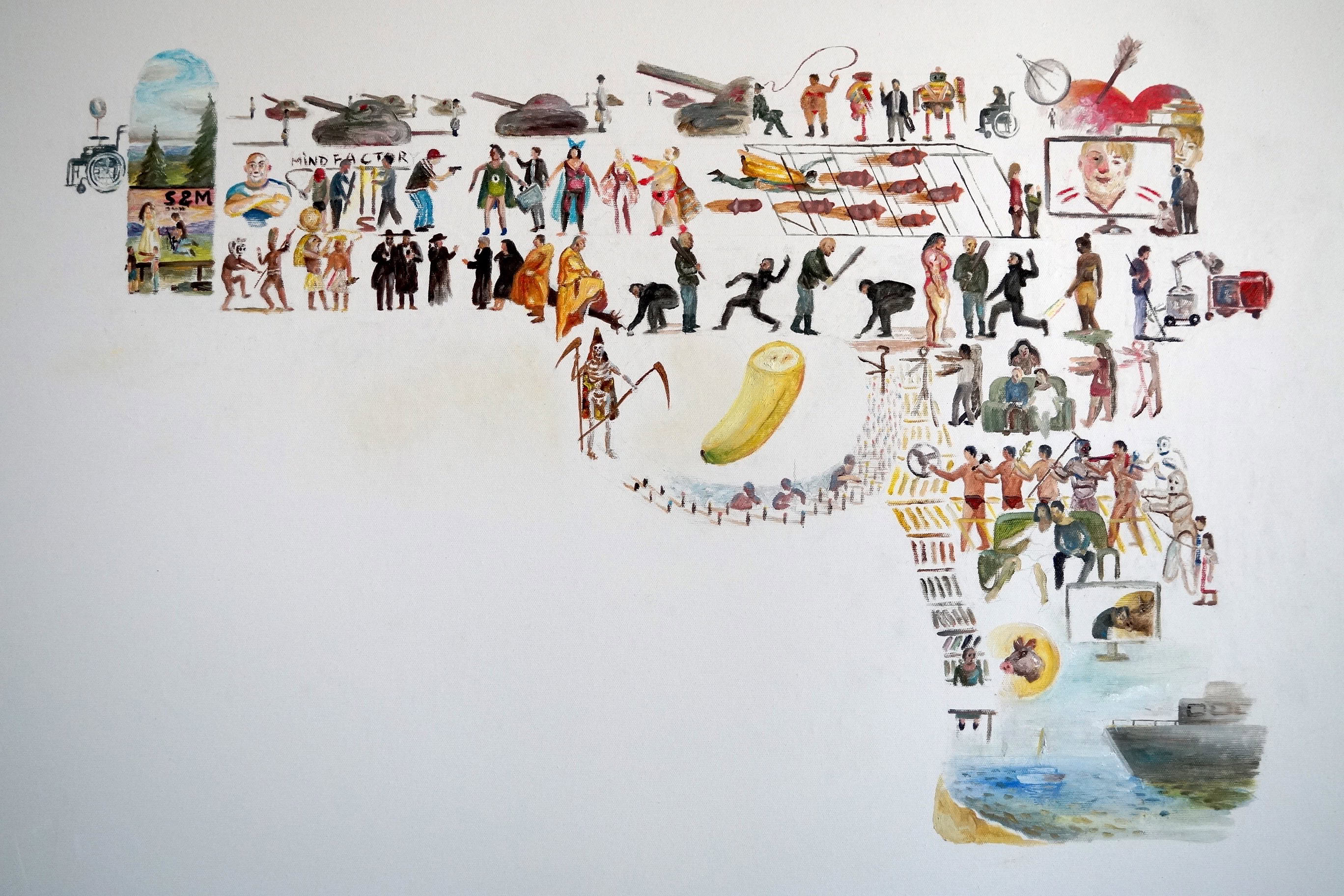
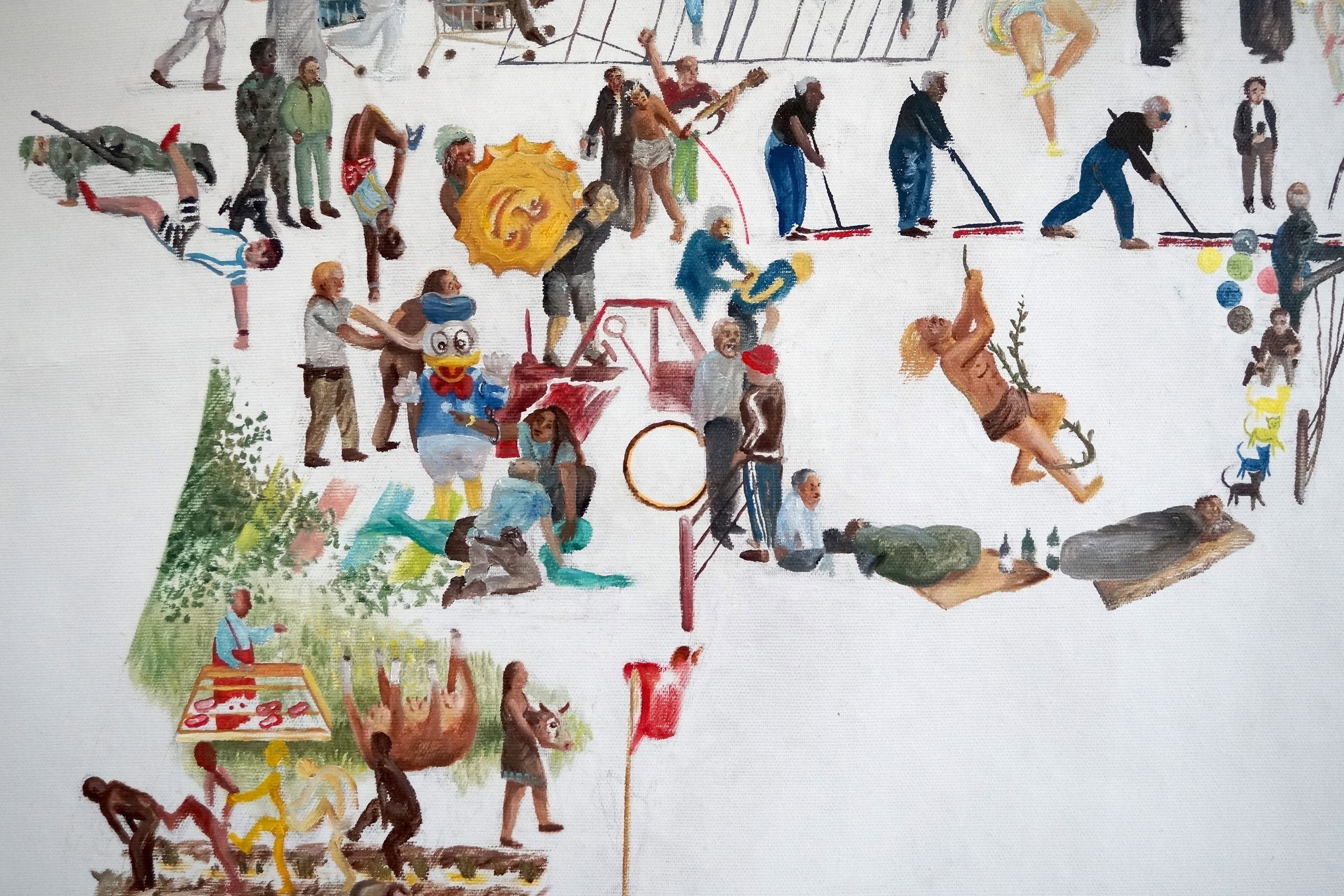
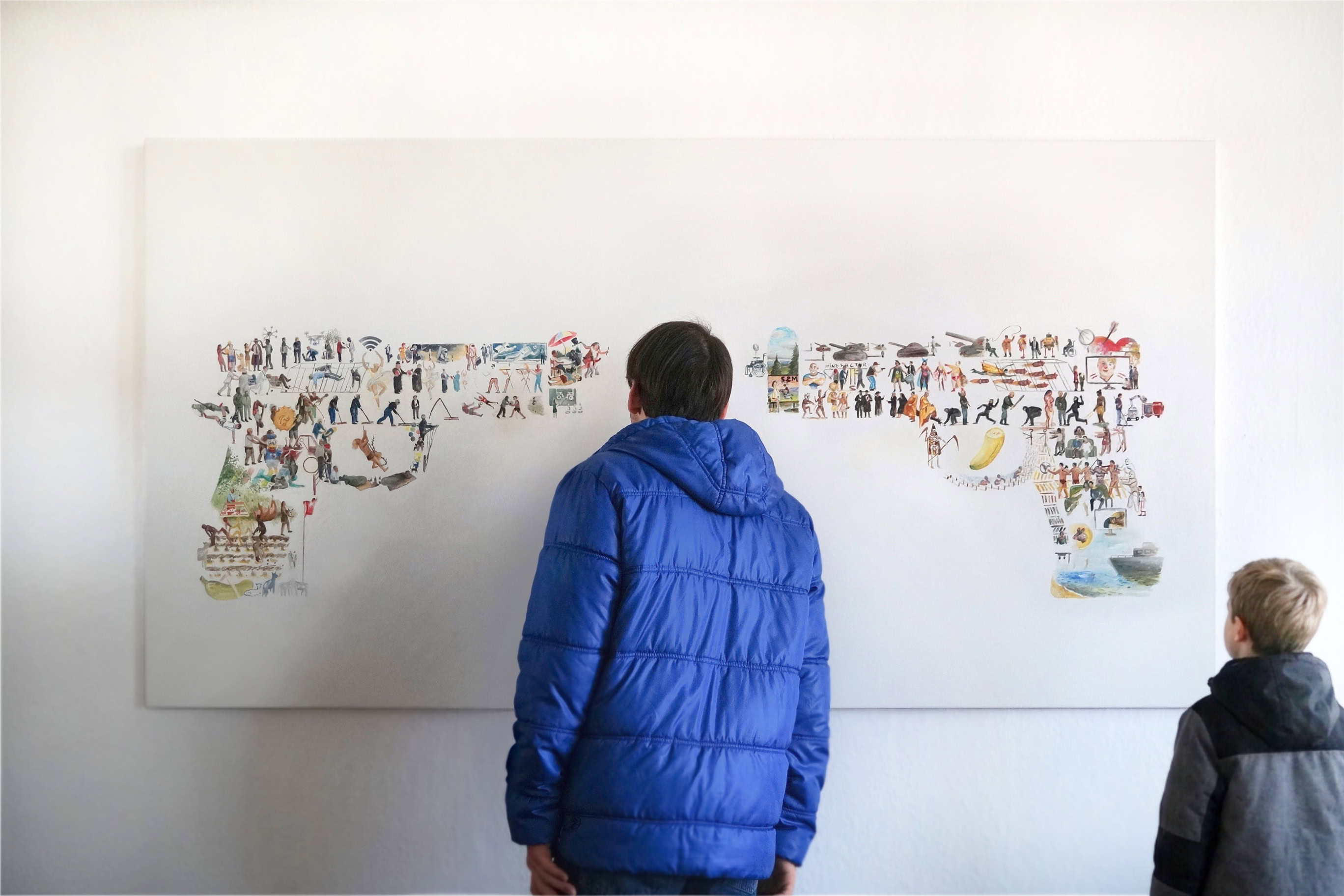
White Rooms Resonance
Paradox
2015 – Present | Oil on canvas | Dimensions variable (40 – 200 cm)
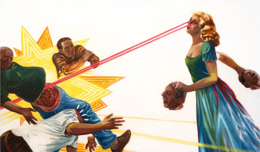
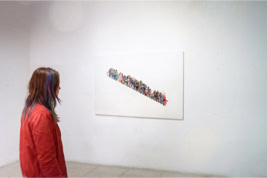
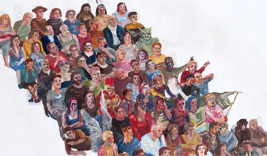
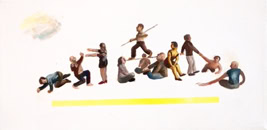
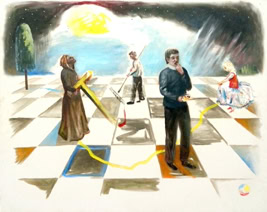
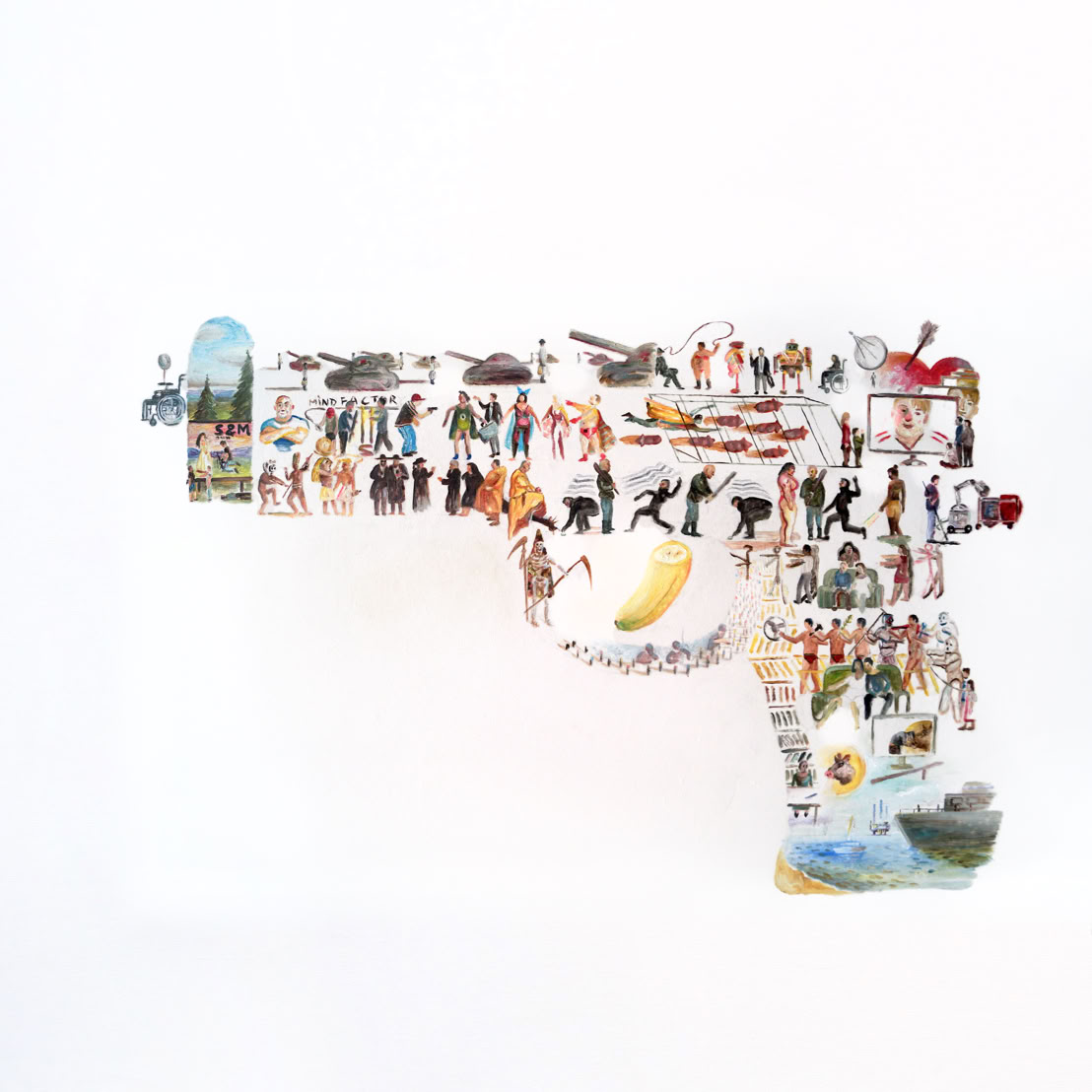
This series explores the inherent contradictions of the human condition. Here, monumental forms—symbols of power, desire, or universal struggle—are built from a dense mosaic of small, independent vignettes. These scenes oscillate between grand philosophical inquiry and raw, everyday experience; they reflect the tension between our quest for higher meaning and the pull of immediate, primal needs. By anchoring abstract themes like violence or sexuality in a multitude of human stories, the work reveals the fragile, often fragmented architecture of our collective identity.
White Rooms Resonance
Convergence
2015 – Present | Oil on canvas | Dimensions variable (40 – 200 cm)
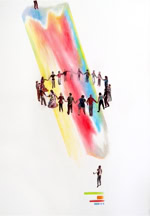
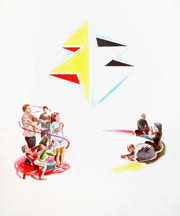
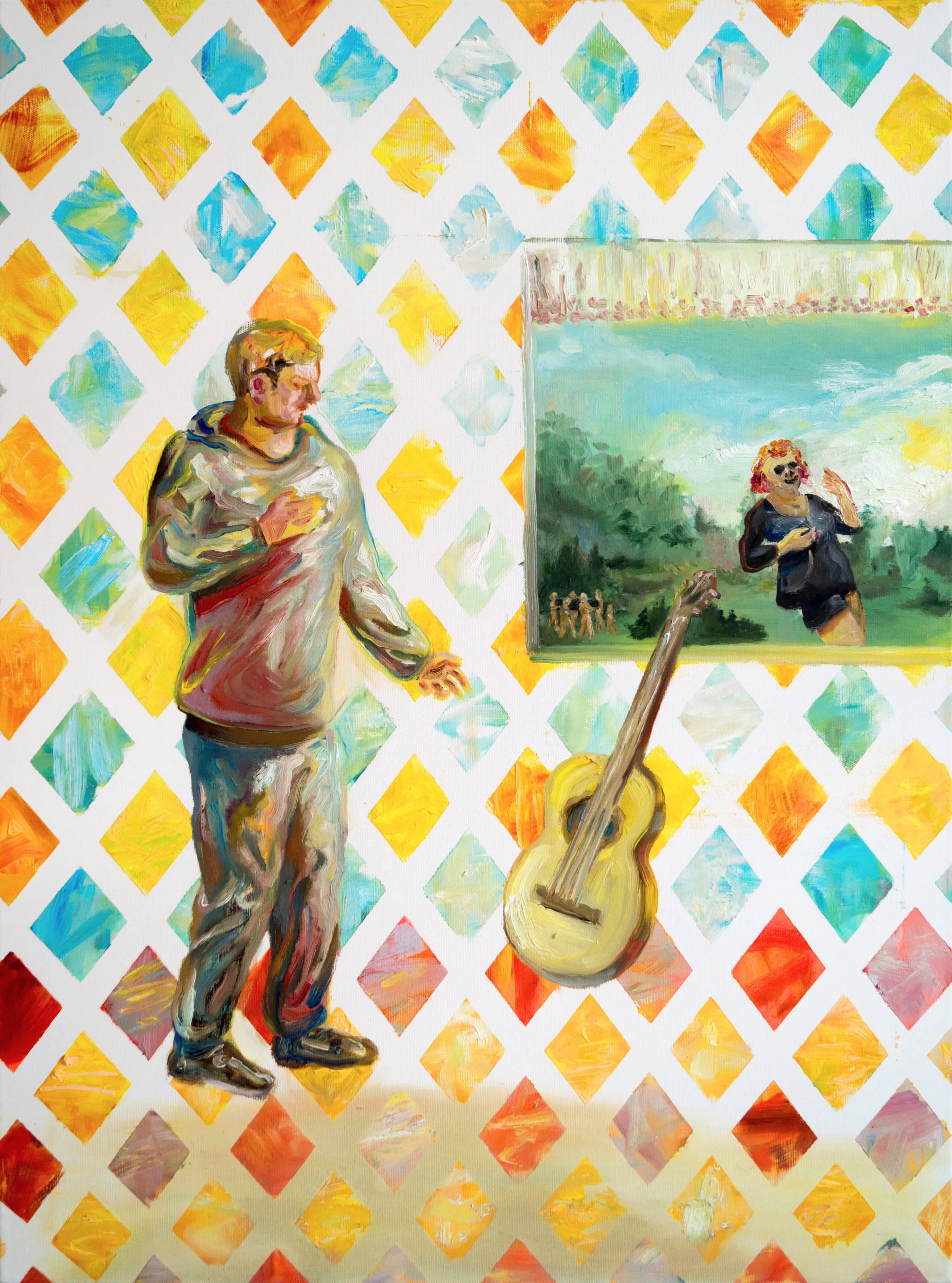
This series examines the architecture of human connection and the collective search for meaning. Within expansive white voids, figurative clusters converge toward moments of shared resonance, exploring the fragile balance between individual intent and communal devotion.